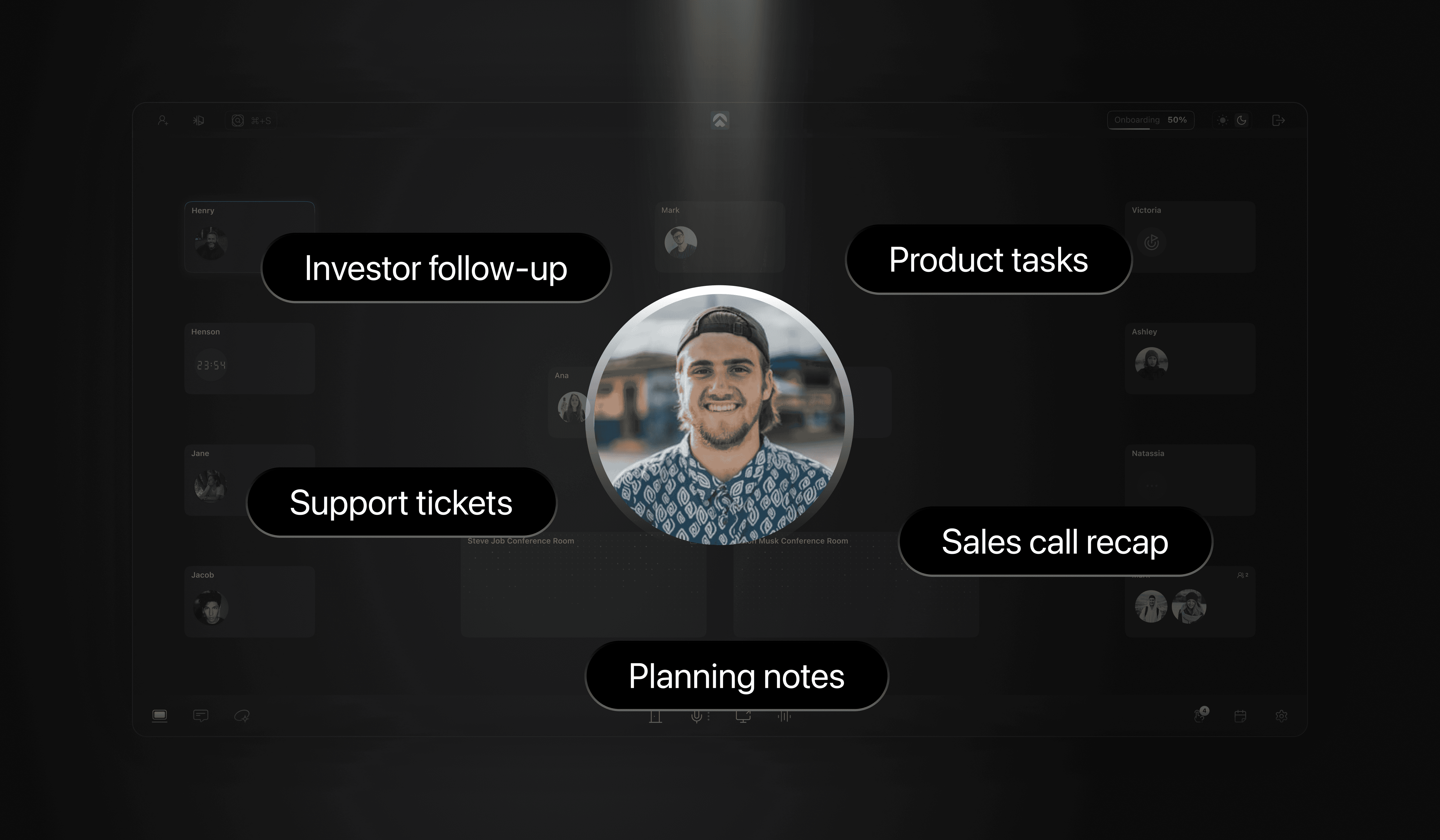
Running a company alone is a test of endurance. One moment you’re pitching a customer, the next you’re handling product decisions, drafting follow-ups, reviewing finances, solving support issues, and somehow trying to stay ahead of everything else on your plate.
The challenge isn’t ambition or skill.
It’s bandwidth.
There is simply more work than one person can sustain — especially when everything depends on manual effort, scattered tools, and memory.
This blog breaks down the real burden solo founders carry, what they need to operate at team-level speed, and how intelligent systems help them scale themselves long before they hire.
The Situation: Solo Founders Aren’t Short on Vision — They’re Short on Support
Early-stage founders handle 70–80% of operational and execution work (Startup Genome).
Freelancers operate under similar conditions, performing every role themselves.
What slows them isn’t the work itself — it’s the structure around the work.
Common realities:
Calls generate more tasks than one person can track manually
Notes sit across tools, making follow-through uncertain
Tasks feel heavy because the first step is unclear
Follow-ups, emails, and proposals get postponed
Work feels unstructured, so starting becomes harder
Context disappears because everything is stored piecemeal
Studies show:
Knowledge workers lose 58% of their time on coordination rather than execution (Asana Work Index).
41% of tasks get delayed because they lack clarity (IDC).
Cognitive overload increases the likelihood of procrastination by up to 50% (APA).
Switching across tools reduces productivity by 20–30% (Harvard Business Review).
This is the Situation in STAR: A founder doing the work of a team — without the support structure of one.
How Velozity Helps You Execute Like A Team
What solo founders need isn’t motivation.
They need infrastructure that multiplies their capability.
Velozity is the intelligence layer that reconstructs the workflow of a founder into a clear, continuous, frictionless system.
Below is what Velozity actually does that changes the founder’s day:
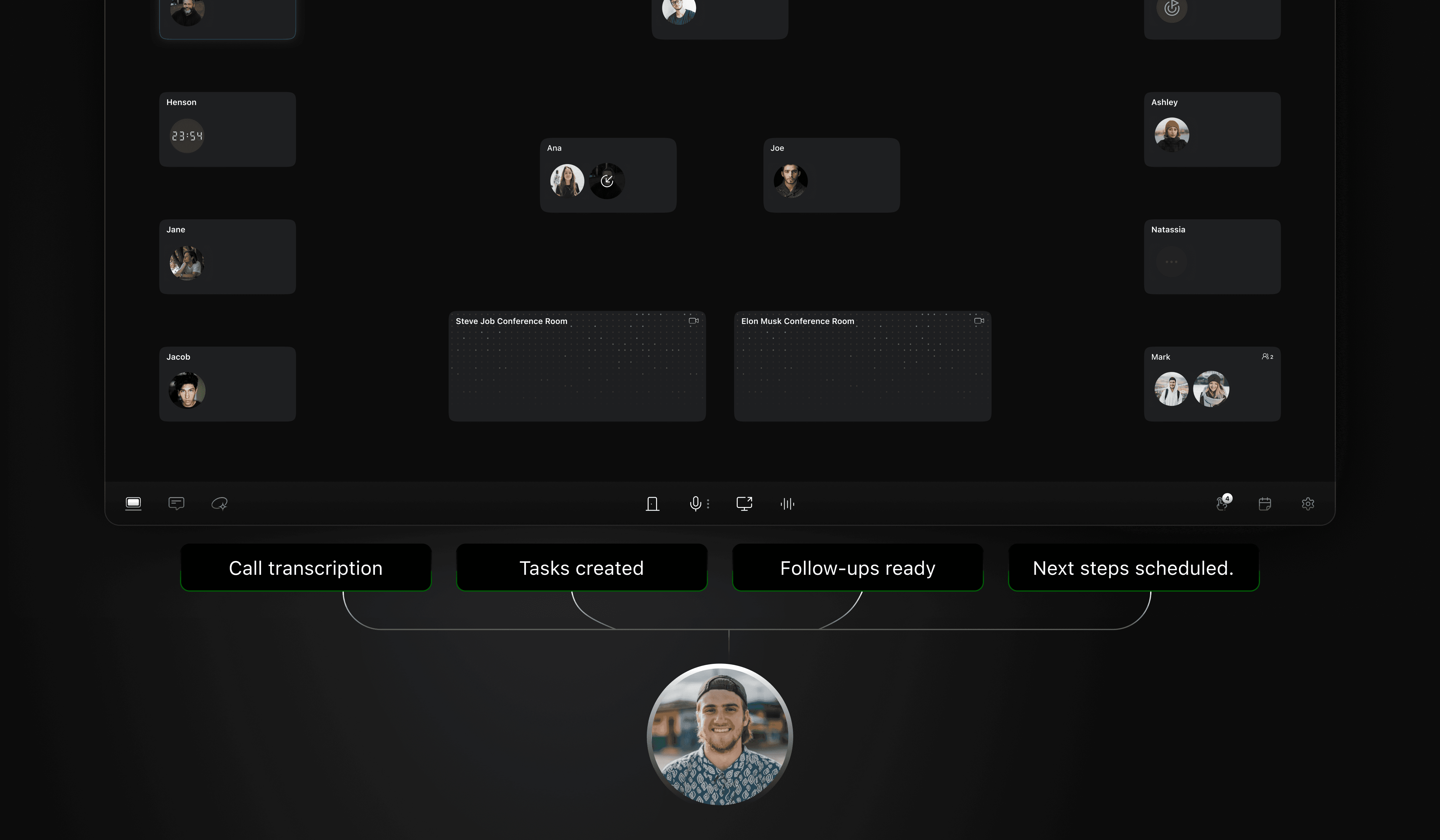
1. It Captures Every Conversation and Turns It Into Workable Structure
Solo founders jump from call to call.
The problem isn’t note-taking — it’s activation energy afterward.
Velozity solves this by:
Transcribing every call
Extracting tasks automatically
Attaching decisions and context
Categorizing tasks into correct project spaces
Eliminating the need to reconstruct anything later
Instead of “I’ll sort this out after,” work is already structured.
This is the first multiplier.
2. It Organizes the Founder’s Work Automatically
Founders don’t have time to maintain task lists, boards, or project hierarchies.Velozity handles it.
Tasks flow into the right project automatically
Projects update as conversations evolve
Related tasks cluster themselves
Nothing needs manual sorting or administrative upkeep
This gives the founder structure without the burden of creating structure.
3. It Executes Routine Work So Momentum Never Breaks
Momentum is lost in small steps:
drafting follow-ups, writing emails, scheduling next actions, preparing documents.
Velozity acts as a quiet operator that:
Drafts emails
Creates proposals
Prepares meeting summaries
Schedules next steps
Generates tickets or documents
Sends reminders and updates
When these steps happen automatically, the founder’s focus remains on meaningful work.
4. It Replaces Fragmented Tools With One Connected Workspace
Every time founders switch apps, they lose rhythm.
Velozity brings everything together:
Calls
Chat
Tasks
Projects
Calendars
Notes
Context
AI execution support
This unified workspace eliminates the operational drag that cripples solo output.
5. It Lets Solo Founders Expand Into a Team Without Changing How They Work
When a solo user grows, Velozity becomes the workspace for their team instantly — without rebuilding processes or creating new systems.
How it works, simply:
Invite a teammate into your Velozity space
They enter the same structured environment you’ve been using — nothing to recreate.All past transcripts, tasks, and decisions are already organized New teammates understand the work immediately. No lengthy onboarding.
Projects and tasks update for everyone automatically
The workflow stays consistent whether it’s one person or five.Shared presence makes collaboration natural
Teammates see who’s available, focused, or in a call — reducing alignment friction.Communication, context, and execution stay in one place No scatter, no new tools, no operational reset.
Velozity doesn’t just help a solo founder work faster—it becomes the operating system that supports the first teammate and every one after.
Conclusion
Solo founders don’t struggle because they lack capability — they struggle because they’re operating without the structural support a team naturally provides.
The real leverage comes from a system that captures work as it happens, defines tasks clearly, organizes projects automatically, and handles routine execution so founders can stay focused on progress.
Velozity gives solo operators exactly that: an intelligence layer that turns conversations into action, maintains clarity, and preserves momentum. And when the first teammate joins, the same system scales with them — no process rebuild, no tool switching, no loss of context.
With Velozity, one person can move with the speed, consistency, and confidence of a team.
Frequently Asked Questions
How does Velozity help me handle more work as a solo founder?
It captures calls, creates tasks automatically, organizes projects, and handles routine execution so you can focus on higher-impact decisions.
Can Velozity replace my note-taking app, meeting recorder, and task tool?
Yes. Velozity unifies transcription, task generation, meeting notes, follow-ups, and project organization in one workspace no app switching.
What happens when I hire my first teammate?
You can invite them directly into your workspace. They instantly see your tasks, transcripts, and project context without needing separate onboarding systems.
Do I need to change my workflow to use Velozity?
No. Velozity fits into your existing processes and improves them by connecting conversation to execution in one unified space.
