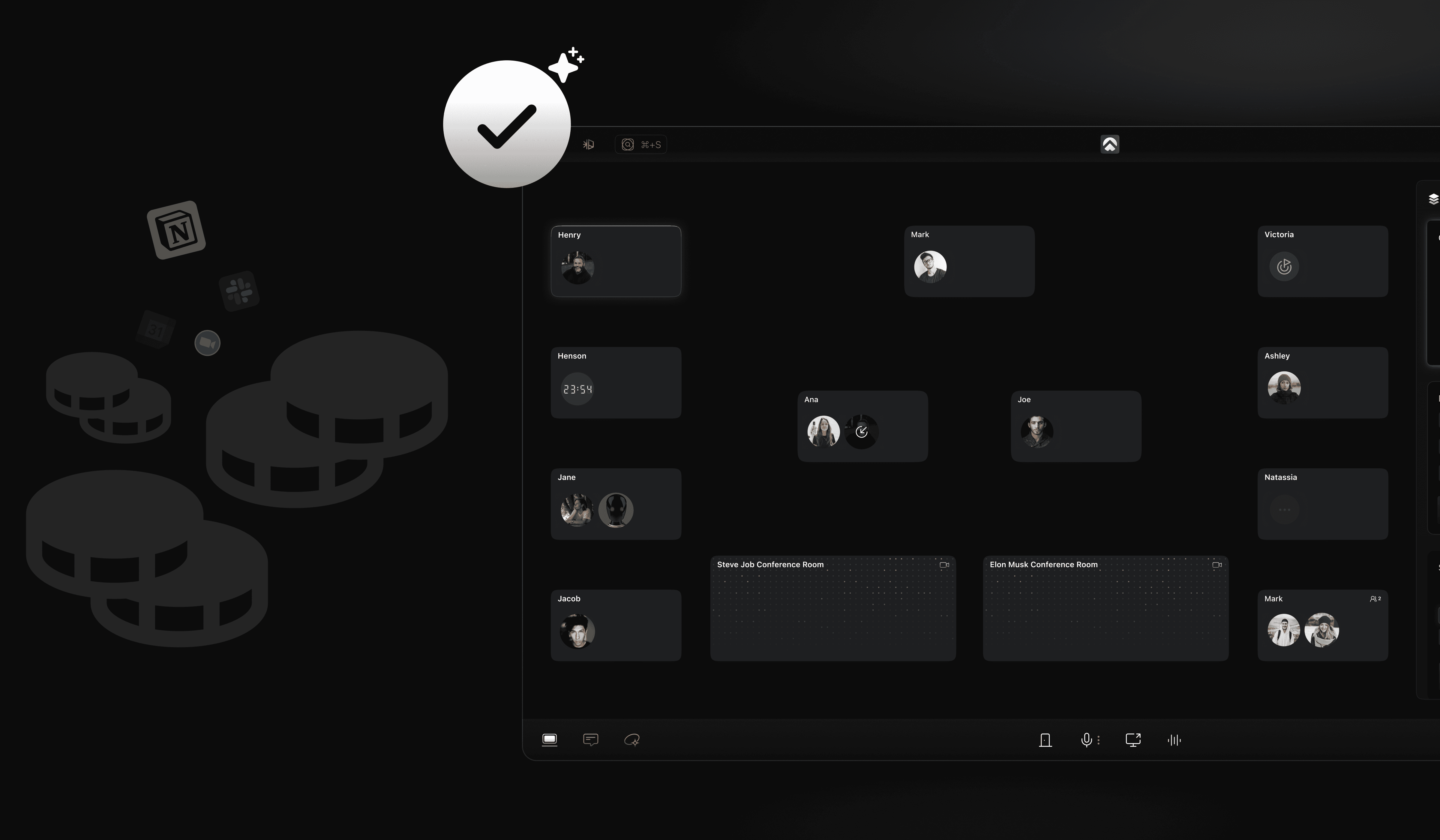
Most startups don’t overspend because they want to.
They overspend because the “standard” tool stack becomes the default: Slack for communication, Zoom for calls, Notion for documentation, Calendly for scheduling, Fireflies for transcription, and several other services layered on as the company grows.
Individually, these tools are fine.
Together, they create a level of cost and operational overhead that early teams cannot justify.
Startups operate with limited runway. Every subscription increases that runway burn. More importantly, every additional tool increases complexity, context switching, and time spent managing the system rather than executing the work.
This is why many early-stage teams are reducing their SaaS footprint and adopting a single operating environment instead of a fragmented set of tools.
Velozity offers an alternative: an AI Office that replaces several subscriptions and reduces the coordination load created by disconnected tools.This blog discusses why startups are choosing this shift.
The Startup Challenge: A Fragmented Stack Is Expensive and Inefficient
Subscription creep happens quietly. Each tool solves a specific use case, but each one also adds cost, complexity, and overhead.
Below is the typical monthly spend for two common configurations:
a lean stack, and
a more robust stack used by many scaling teams.
Lean Startup Stack (Monthly Pricing)
Slack Pro: $8.75/user
Zoom Pro: $13.33/user
Notion Plus: $12/user
Fireflies Pro: $10/user
Calendly Standard: $10/user
Total: $54.08/user/month
Upgraded Startup Stack (Monthly Pricing)
Slack Business+: $18/user
Zoom Pro: $13.33/user
Notion Plus: $12/user
Fireflies Pro: $10/user
Calendly Standard: $10/user
Total: $63.33/user/month
For a small team, the annual spend becomes significant quickly.
Annual Cost Impact
Team Size | Lean Annual Stack | Upgraded Annual Stack |
|---|---|---|
10 users | ~$6,489.60 | ~$7,599.60 |
20 users | ~$12,979.20 | ~$15,199.20 |
30 users | ~$19,468.80 | ~$22,798.80 |
This is only the financial side.The operational cost is often higher.
The Hidden Cost: Fragmentation Slows Teams Down
Fragmented tools increase the amount of coordination work required to keep a team aligned.
Common patterns include:
Information spread across apps
Manual transitions between tools
Duplicate work due to missing context
More sync meetings to resolve gaps
Increased onboarding time for new hires
Reduced visibility for founders and managers
Industry research reinforces the issue:
20–30% of productive time is lost to context switching.
50–60% of work time goes into coordination rather than execution.
For early-stage teams, this overhead impacts both speed and runway.
How Velozity Helps Reduce Cost, Complexity, and Drag
Velozity is an AI Office—not an add-on to the existing stack, but a replacement for several categories of tools that currently work in isolation.
The benefit is twofold:
Lower SaaS cost and lower operational friction.
Cost Comparison: One Platform vs. Multiple Subscriptions
Velozity costs $10/user/month. Below is the direct comparison.
Monthly Cost Per User
Stack Type | Cost/User/Month |
|---|---|
Lean Startup Stack | ~$54.08 |
Upgraded Startup Stack | ~$63.33 |
Velozity | $10.00 |
Annual Cost by Team Size
Team Size | Lean Stack | Upgraded Stack | Velozity | Annual Savings |
|---|---|---|---|---|
10 users | $6,489.60 | $7,599.60 | $1,200 | $5,289–$6,399 |
20 users | $12,979.20 | $15,199.20 | $2,400 | $10,579–$12,799 |
30 users | $19,468.80 | $22,798.80 | $3,600 | $15,869–$19,199 |
For cost-conscious startups, this shift has a noticeable runway impact.
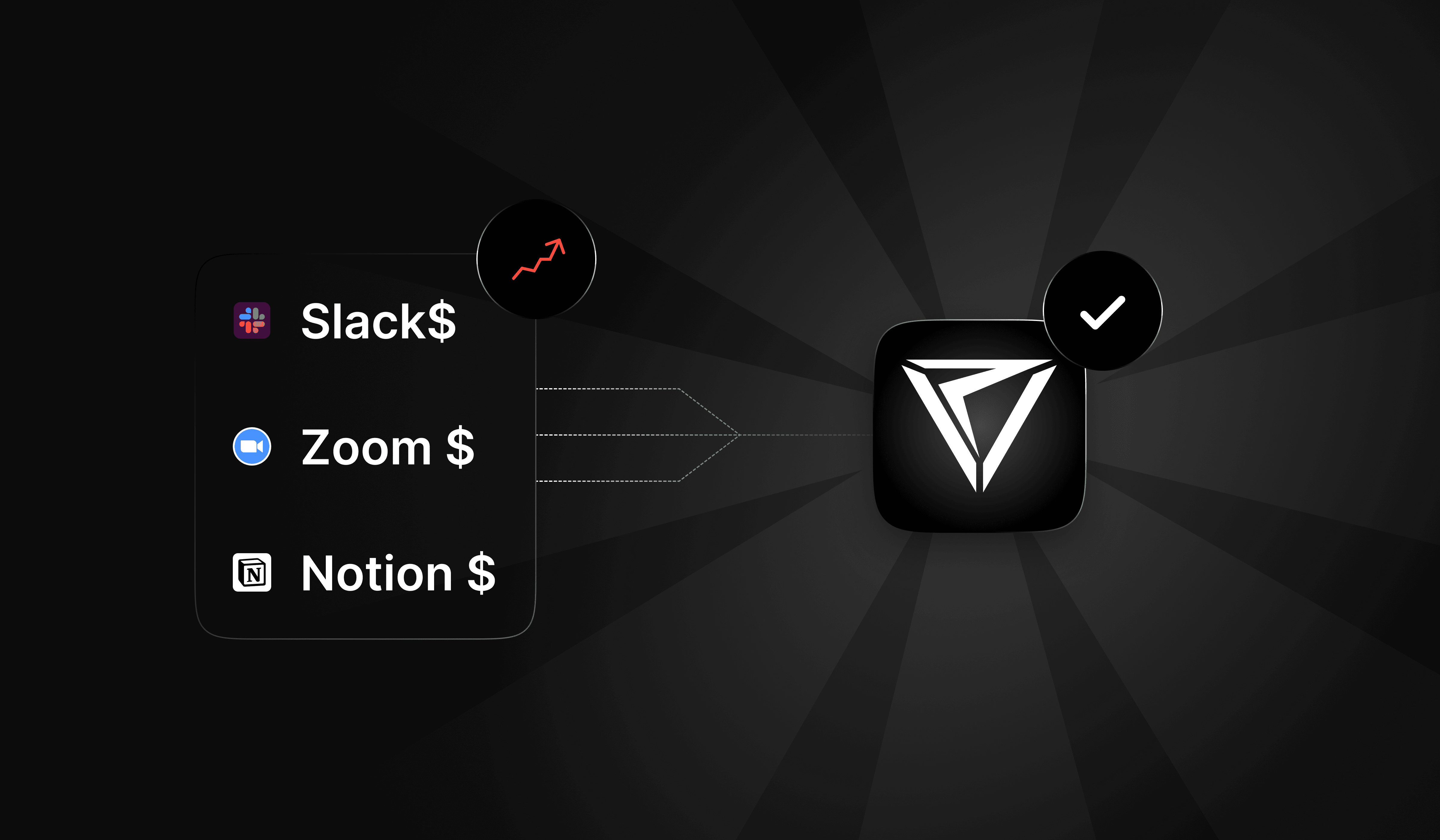
Built for Speed: One Workspace, No Extra Coordination Work
Startups move quickly when coordination is simple and systems don’t require overhead. Velozity helps by reducing the number of moving parts.
Setup takes minutes, not days
No multi-tool integration chains
No synchronization between permissions
No separate admin dashboards
One login, one workspace, one billing structure
Essential features are built in
Team chat and presence
Voice-first workflows
Built-in video calling
Real-time transcription
Automatic task and follow-up generation
Document and file sharing
Teams don’t switch between environments to communicate, meet, assign work, or capture context.
No enterprise overhead
No annual contract requirements
No multiple pricing tiers for basic features
No vendor lock-in
No per-feature upsells
No workflow fragmentation
This keeps the environment simple and allows early teams to focus on execution rather than system maintenance.
A Unified System Improves Speed and Reduces Drag
While cost savings matter, the larger benefit is the reduction in operational friction.
With Velozity, the workflow becomes linear:
Call → transcript → decisions → tasks → follow-ups → project updates
There is no need to manually transfer information between tools. There are fewer gaps, fewer “what happened last meeting” moments, and fewer sync calls required.
For founders, this means:
Clearer visibility into ongoing work
Faster onboarding of new hires
Less duplicated effort
More uninterrupted execution time
These improvements complement the cost reduction, making the overall workflow lighter and more predictable.
Getting Started
Most teams begin by testing Velozity for meetings and task capture. As they experience the reduction in coordination effort, they expand usage to communication and documentation.
The onboarding process is simple:
Create a workspace
Invite your team
Use Velozity for your next set of internal or external calls
Let AI handle the meeting-to-task transition
Consolidate tools over time, not all at once
Startups often see measurable cost and time savings within the first month.
Frequently Asked Questions
How long does it take to onboard my team to Velozity?
Most teams set up their workspace and begin using Velozity within 10–15 minutes. There are no integrations required, and teammates can join with a single invite link.
Do we need to migrate our previous data into Velozity?
No. You can start using Velozity immediately for meetings, tasks, and communication. Migration is optional and can be done gradually if needed.
Is Velozity secure enough for sensitive conversations?
Yes. Velozity uses modern encryption standards for data in transit and at rest. Transcripts, tasks, and files are stored securely, and access is limited to your team members.
Can external guests join meetings without creating an account?
Yes. External participants can join through a simple invite link. They do not need to install anything or create an account.
Does Velozity replace Slack, Zoom, Notion, Calendly, and Fireflies?
It replaces the core functions of all these tools: communication, meetings, notes, scheduling, and transcription. Most early teams consolidate several tools within the first few weeks.
How does Velozity improve meeting productivity?
Velozity captures transcripts, identifies decisions, generates tasks, drafts follow-ups, and updates projects automatically. Teams no longer need to manually rewrite notes or reassign next steps.
Does Velozity integrate with our existing calendars?
Yes. Velozity syncs with Google Calendar and Outlook, so meetings appear seamlessly across systems.
What is the pricing model?
Velozity offers a simple, flat $10/user/month plan during beta. There are no feature-based tiers, add-ons, or lock-in commitments.
How does Velozity support remote or hybrid teams?
Presence indicators, shared workspaces, built-in video, and unified context help distributed teams stay aligned without extra sync meetings or scattered tools.
Will Velozity work if only part of our team adopts it?
Yes. You can begin using Velozity for internal meetings and tasks even if some teammates remain on legacy tools. Most teams expand adoption after experiencing the reduced friction.
What if we scale quickly? Does Velozity handle larger teams?
Velozity is designed for both solo founders and teams. As your team grows, the workspace structure and AI automations scale with you without needing separate tools or new workflows.
